Disclaimer: This post contains a lot of my personal opinions. Your opinions might be completely different than mine, and that’s fine. This is just for fun. They’re just books. Go live your life knowing that you have original thoughts.
Disclaimer #2: Dance books, especially fictional ones that play up the drama, tend to have an alarming amount of possibly triggering content. Please engage with media at your own discretion <3.
Hey, hi, hello.
How are y’all doing?
I’m behind on my blog posts I know don’t come for me!!! Performance weeks can do that to you!
THAT BEING SAID, I think it’s okay. The post I was supposed to make this week, about RED-S, I think would be better made later anyway, in the spring, when I am deeper into my thesis research and writing.
So, we’re making a slight adjustment. Today, we publish our book review post, and then, (hopefully), we continue as scheduled. As I said in the beginning, I’m giving myself grace and flexibility with this.
Enough of that, onto the subject at hand!
I have this strange… addiction? Fascination? Guilty pleasure? And that guilty pleasure is reading shitty dance novels.
Now, by “shitty dance novels”, I don’t mean autobiographies, life-accurate retellings, or historical works. No no no. There are plenty of great books out there that fall under these categories.
However, I mean trashy, fictional, entertainment-only reads that are designed to be attractive to the general populice in this current age, unhinged campy drama left untampered with by the constraints of reality.
I just think it’s funny. I read them, and then I evaluate them by some random common criteria that has just popped up in my mind the longer that I do this. Are the ballet terms used accurately? Are the characters relatable? How is it representing our profession? Do I agree with this depiction? How many stereotypes can I count? Would this be more or less entertaining if I was reading it as someone who doesn’t know much about dance?
I find that I prefer books that are relatable and interesting for me to read as someone who does ballet. So, I ranked them according to that preference. However, someone else may find the order to be completely different for them. That’s the fun of it. It’s a complete toss up when it comes to a dance book, especially since this is such a niche community.
Therefore, I shall lay them all out bare for you, ranked according to my criteria with some commentary from me about the premise so that you will hopefully know whether this shitty dance book is for you, or if I read it so that you don’t have to :).
Rank #6 out of 6:
Tiny Pretty Things/Shiny Broken Pieces by Dhonielle Clayton and Sona Charaipotra
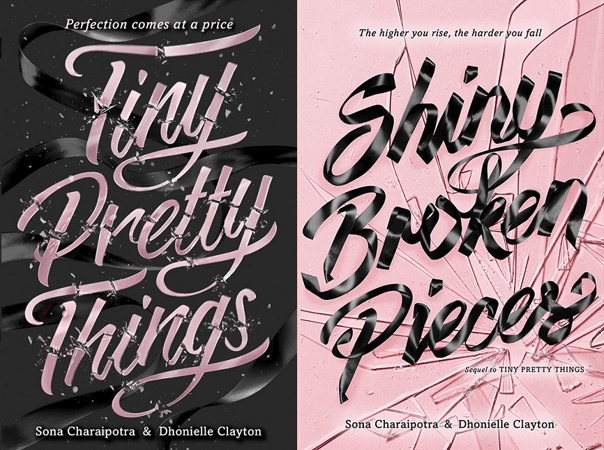
Oh Boy.
I feel like this duology is probably the most well-known of this bunch, given the Netflix adaptation of the first book under the same name.
While the story and the characters underwent a lot of changes to make it to the screen, the essence of the over-the-top, dramatic, cringe-worthiness is still evident in the source material.
The story centers around the perspectives of three dancers: Giselle Stewart, or “Gigi” (Neveah in the show), E-Jun Kim, or “June,” and of course the perfect blonde mean-girl powerhouse herself, Bette Abney. The plot line depicts the cutthroat competition within their New York City-centered ballet school. As casting goes up, so do tensions, especially when laid-back Californian newcomer Gigi throws a wrench into the established order of both relationships and roles. The girl-on-girl conflict and pettiness is real, each new spiteful action of the characters towards each other topping the previous in danger and atrocity.
So now to our criteria. Was the ballet talk accurate? Well…
You can tell that the authors did a lot of research to create this story. You can also tell that they weren’t ballet dancers. The vocabulary and general knowledge was fine on most accounts, but there were also quite a few descriptions or events that just felt… off. Like, that’s not what you would be thinking/feeling when you are doing fouettes. We never call little children petite rats. Sorry but that’s just dumb. And why in the world would an entire school of dancers stay out all night, at a bar, getting black-out drunk before what is essentially comparible to opening night of an SAB workshop performance? Maybe the odd loners, but everyone? Doesn’t seem like the best idea… and, spoiler alert, it wasn’t XD.
Overall, the depiction of ballet as a whole was… not the greatest. Obviously, when I picked it up, knowing something about the premise, I knew that it wasn’t going to paint the culture of the dance school in an unproblematic light. And a critique of ballet culture is valid. Ballet is not wonderful all the time. But still, this was a little much. In general, all the characters were shitty. Some meaner and shittier than others… but they all did super shitty things. And kind of out of left field too. Like… whoa, don’t you think that was a bit of a disproportionate reaction to the events in the timeline here?
One thing that one could say this book had going for it is representation, but even in that realm I noticed one glaring, and honestly book-ruining, problem. Yes, there was a black character who was a lovely ballerina, which we like to see, along with a half-Korean character dealing with the clash of her cultural background with her Western life. As far as I could tell with my limited knowledge, this rep was interesting and accurate. However, my biggest problem was with the LGTQA+ characters in the novels and how they were portrayed. Yes, everyone in the book did horrible things, but how come the only two gay characters (who didn’t even have POVs, by the way), were literally either the worst bullies of them all or committed the most atrocious, unforgivable crimes? I think that the show adaptation made a conscious effort of fixing this, for good reason, because it was something I noticed immediately and have seen other comments on as well.
Okay, so I just tore those book apart. But I finished both novels. Which is to say I didn’’t put them down for their cringe-worthiness (which is sometimes all-too-easy with dance reads). And I was genuinely entertained, even if with that guilty-pleasure seeking interest.
So the conclusion is, for me, as a dancer, not my fave. But there’s a reason these books are the most popular of the bunch. If you’re not triggered by depictions of eating disorders, chaos, and mild violence, and you want something to entertain you with some twisted, Pretty Little Liars-esque drama, these books may be for you.
Rating: 2/5
Rank #5 out of 6:
The Turnout by Megan Abbott
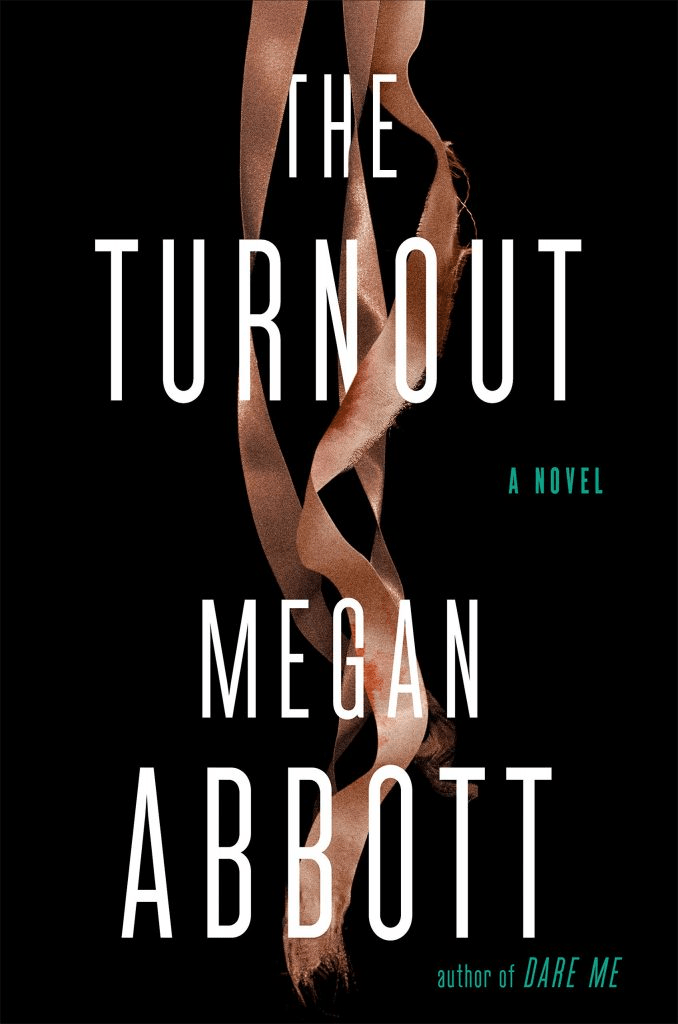
I said that Tiny Pretty Things was twisted, and it is.
But this book is even more twisted, just on a deeper, darker – and, quite frankly, slightly more terrifying – level.
The plot of this book revolves around three retired dancers – Dara, her husband Charlie, and her younger sister Marie. They work together to run a ballet school, which they have come to own after the death of Dara and Marie’s parents in a car accident. Things start to fall apart a little after Marie suddenly decides to move from the home they share into the attic of the ballet studio, breaking with the dynamics of their family unit. Things start to fall apart more when a radiator fire destroys a part of said studio, right when Nutcracker season is about to begin. Things disintegrate when contractor Derek enters their lives to repair the damage, disrupting more than just the calm order of the ballet school with his big dreams and constant drilling. But maybe it takes things to fall apart in order to unveil the horrible truths that have been lurking just below the surface…
I’m going to put it bluntly here. The main point of this book is not the dancing. The ins-and-outs of preparing for Nutcracker season are a perfect backdrop for the dark and disturbing arc of the story. And one of the main subjects of commentary in this dark and disturbing story is sex. How it affects the lives of women specifically, how it can be used to coerce and manipulate, how it represents a delicate balance between innocence and evil (and where that line is drawn in our society). I’m not saying that sex itself is disturbing. But it was for me in this context, as both subtle and blatant innuendo was used to color the majority of the scenes in the dance studio, often involving young children at their training and their interactions with the adult characters. Now, I really don’t think that Megan Abbott thinks that ballet, specifically ballet for children, is inherently sexual. Her writing is beautiful and atmospheric, scenes portrayed descriptively and vibrantly in short, jarring chunks, and I really do think that her depictions of the ballet studio were probably just meant to further her theme. After all, ballet really works well as a metaphor for the notion that things that look pretty on the outside can often be rotten within. However, I still didn’t really like it. Kind of ruined the Nutcracker a little bit for me, to be honest (just kidding, but still…). And I can’t imagine what a non-dancer would think of us reading it XD.
Was the ballet talk accurate? Yes… it was clear Abbott did her research. I mean, I’ve never personally experienced my turnout suddenly just cracking open as a child but we all know that was probably just a metaphor for something else. And the depictions of preparing for The Nutcracker brought me back to my youth, even if making me slightly uncomfortable about that association. Were they character relatable? Not for me, but they were certainly interesting, delusional, and unreliable, which made for a fascinating read if anything.
The conclusion? After reading this, I would certainly pick up another book by Megan Abbott. She’s a pretty well-known author, even though I’ve never experienced her work before, and I loved her writing style and the way she drew me into her world. The content? Not so much. I didn’t rate this book very high, simply because it made me feel… tainted. Like kind of icky. Which I think was the point. But still, not really my style. Give it a go if you want something weird, atmospheric, and disturbing. Otherwise imma tell you to skip it.
Rating: 2.5/5
Rank #4 out of 6:
Astonish Me by Maggie Shipstead
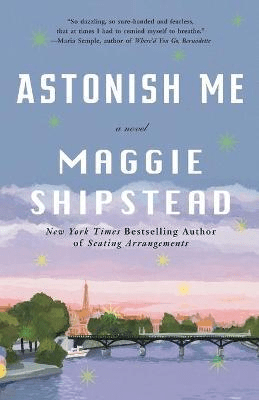
I feel like this is where my list takes a bit of a jump – we’ve breached the 3-star threshold, and all of the books above this point were actually quite enjoyable. I would recommend them to a range of audience members that is a bit wider, at least. Astonish Me, by respected and established author Maggie Shipstead, falls in this category.
This book does a lot of hopping through time, ultimately spanning two generations of a family of dancers. The main POV, however, is that of Joan, an averagely-talented American ballerina whose life changes when she is chosen to assist in the defection of Barishnokov-esque Russian star Arslan Rusakov. The story is written in short scenes that casually interweave to tell the whole story in a gently unfolding, “slice of life” way. Throughout it, we jump from Joan’s fiery relationship with the foreign dance god to her and retirement from dance and marriage to her highschool sweetheart to her efforts to raise her son Harry and live a “normal life” in the California suburbs. When Harry grows older and an aptitude for ballet reveals itself, we witness the family’s return to the dance world and the startling consequence for Joan and the person that she has become.
As far as my knowledge goes, this book was an impressively accurate depiction of the elite dance world throughout a number of time periods. It depicted a darker and more scandelous side of dance, certainly, but also had moments of magic and joy interspersed throughout. The writing was good, and I feel Shipstead portrayed the melancholy of Joan and her unrequited love and unrealised dreams very acutely. This book didn’t really contain huge dramatic moments – there weren’t really any cliffhangers, any jaw-dropping bombshells. Even the “big reveal” that came at the end was sort of unveiled slowly to the characters involved, with a huge jump in time directly afterwards that didn’t really allow the audience to glimpse their raw reactions. That was kind of the way the whole book worked – short moments and scenes captured, with a huge leaps in the timeline between them that didn’t really allow a lot of things to settle.
It was a nice book, it really was. But the reason I didn’t rate it higher is that I didn’t really have any significant feelings after reading it. I wasn’t amazingly attached to any of the characters – I experienced their moods, judged their bad decisions, witnessed their victories and shortcomings as if from afar. I suppose I felt a little wistful at the passage of time, the way being involved in the ballet world affected the lives of each character in simultaneously negative and positive ways. My end impression was a sort of a “huh. That was interesting”. Not really how you want someone to react after reading your book. I honestly feel like if it was longer, if I had more time to build connections with the characters at each age and see how the plot twist resolved itself, I would have liked it more. Nonetheless, if you want a short, solid, accurate ballet read, give it a shot!
Rating: 3.5/5
Rank #3 out of 6:
Bunheads by Sophie Flack
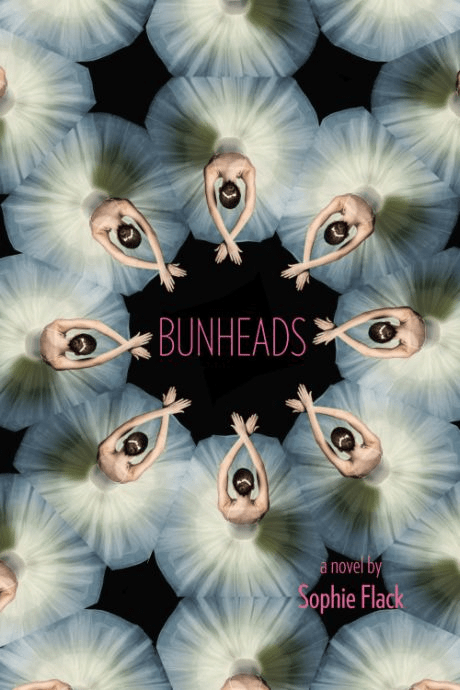
Okay, imma be honest, it’s been a hot second since I’ve read this book, so my memory might not provide the most accurate review. But I just had to write about it!
I first found Bunheads when I was around 15 or so, and I feel like it was integral in increasing my knowledge about life as a professional ballet dancer. I remember rereading it at least three times throughout highschool and I still have a copy in my bedroom at home. It definitely deserves a spot on this list, one because it is a lovely little dance book, two because of pure nostalgia :).
This book is about 19-year old Hannah Ward, who is entering her fifth year in the corps of Manhatten Ballet Company (an organization most definitely inspired by New York City Ballet). There’s no murder, no sex scandals, no big reveals – instead, the every day drama of a dancer takes the front seat: injuries, competition, body dysmorphia, dressing room gossip, and that ongoing, internal conflict: Is all this really worth it? That inner turmoil only increases for Hannah when she meets Jacob, a cute, sweet musician and college student who begins to draw her into a whole new, non dance-related world. The story takes us through her year as it unfolds, and she finds herself at a crossroads: will this be the season she gets her big break? Or the one where she decides to let go of her dancing dreams?
I love this book. I just feel like it captures the life of a dancer so acurately – the struggles, the turmoil, but also the moments of joy and wonder and beauty. Sophie Flack was a dancer herself with New York City Ballet, and it is very clear that a lot of this story was based off of her personal experiences. Upon research for this review, I came across a very candid interview that she did about her time in the corps and her subsequent termination from the company by Peter Martins. Even in the interview, where her pain, frustration, and anger is evident, it was still clear that she still had a love for dance that prevailed, despite everything that had happened to her. It seems that she is having a successful career as a writer and editor now, and I am happy for her, because she has an aptitude for storytelling, and her conflicted feelings were projected wonderfully through her main character.
This is not a book for someone who wants constant action. It was a very understated tale about Hannah’s journey and decision making process. It is also not a work to be praised for intricate prose or a unique writing style. It was fun and easy to read, but not anything groundbreaking. Furthermore, it is one of the older books on this list, so there’s a chance that some terms and concepts mentioned might be a bit outdated. However, it is entertaining and (sometimes painfully) relatable for anyone who works in this industry, whether they are still dancing or have decided to move on to another dream. I would recommend it to anyone to which it seems appealing :).
Rating: 3.5/5
Rank #2 out of 6:
Anything But Fine by Tobias Madden
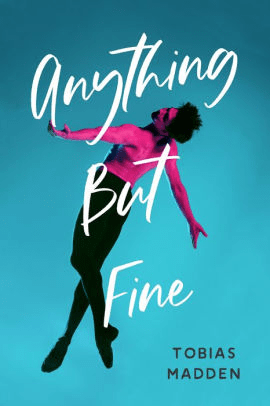
With this next book, (coincidentally the most recent publication of the bunch), we take a big leap back into the realm of trashy teen drama. But this time I use the word “trashy” in the best, most endearing way :).
In this story the plot revolves around Australian teenager, Luca, who has big dreams of becoming a professional ballet dancer. However, by the second chapter, we are jerked from the studio when he sustains a dream-and foot-shattering injury from a particularly unlucky fall down the stairs. To add insult to (literal) injury, he is also forced to leave his friends at his fancy boarding school, where his performance arts scholarship gets revoked due to his inability to dance. Friendless and directionless, at a new school without a passion to devote his energy to, he naturally does what any 16-year-old boy would do – finds something new to obsess over. In this case, the obsession is Jordan, the attractive rower and footsie player he meets at his OT office (footsie is an Australian version of American football if you’re like me and you didn’t know). But Luca knows that his crush is ridiculous. Jordan, who also happens to go to his new school, is popular, out of his league, and very, very straight. Or so he thinks.
If this book were a tv show, it would kind of be like a blend of Dance Academy and Heartstopper. Dance Academy for the ballet drama and Australian quirkiness, Heartstopper for the queer joy and coming-of-age cuteness. If you’re like me and you are a big fan of Alice Oseman’s work, this book will definitely help fill the little Heartstopper-sized hole in left in your chest after finishing the series. There’s the same amount of *gay panic*, the same serotonin-filled escapade into first love. Like Heartstopper (and unlike Tiny Pretty Things) there is also wonderful, positive representation, not only of multiple sexualities but also various ethnicities, cultures and religions in the cast of characters. That being said, while Hearstopper makes conscious efforts to turn teen drama tropes into scenarios that are more wholesome and healthy, Anything But Fine leans into them head-on, from highschool cliques to mean girls and bullies to drunken party mistakes to a classic third-act miscommunication break-up (UGH). Nevertheless, it remained a swoon-worthy, sweet, and funny read, and Luca’s voice, immature and flawed as he may be, was still loveable to me and really served to enhance the story (drama included).
Unlike the other books on this list, this one does take a little step farther from the barre. If you want play-by-play dance action, this is not the book for you, as Luca spends most of it sidelined from injury. However, dance, and Luca’s relationship to it, still plays a large roll in the plot, through his connection with his old ballet friends, his dancing flashbacks, and his inner turmoil about losing his passion. Having thought of himself as a dancer for all his life, that association doesn’t just go away when Luca must leave the studio. His identity crisis often takes center stage, therefore, so does his ballet identity. It is a good thing, then, that everything dance-related is accurate, as Tobias Madden is a performer himself!
What I really appreciated in this story was the theme of love. Not only romantic love, but all the different forms of love in Luca’s life: his love for his friends old and new, his love for his father and his family, and his love for dance. He really has to sort out what kind of love he has been prioritizing, what kinds of love could use some nurturing, what true love really is, and the borderline between love and unhealthy obsession. The clarification of his relationship to dancing slowly unfolds, and as someone with so much respect for this art form, I found it to be incredibly heartfelt and poignant.
To conclude, this book gets an endorsement from me. Does it deserve the Pulitzer prize? No. But it was entertaining and it turned my brain off and I looked forward to returning to it every night, which is really all that I look for at the end of the day. Give it a shot if you want some ballet gays in your life.
Rating: 4.5/5
Rank #1 out of 6:
The Cranes Dance by Meg Howrey
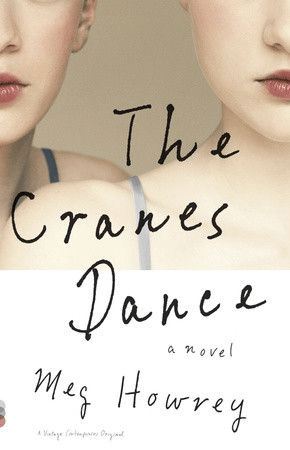
We’ve made it… The final book!
The Cranes Dance is not usually ranked the highest of this bunch on public forums or book reviews. It tends to sustain a lot of mixed feedback.
However, I can honestly say that, for me personally, not is it only my favorite dance book but one of my favorite books in general.
Here is your synopsis:
This story gives you a very intimate look inside the head of Kate Crane, a soloist in another one of those made-up companies authors like to use to allude to New York City Ballet (why never ABT don’t ask me, I guess the drama of that school-to-company pipeline is just too good to resist). Kate is continuing on after a mysterious incident revolving the mental breakdown of her little sister, Gwen, who is a principal in the same company. Gwen has been sent back to their childhood home in Michigan recover, and Kate feels partially responsible for this event. Even moreso when she is given one of her sister’s most iconic roles in her absence. Nevertheless, there are parts to play, ballets to rehearse, people to please, and sprained necks to take care of, so she must carry on. Even when her own depression starts to settle in, prompting an urge to follow in Gwen’s footsteps.
It makes sense that if Bunheads was my favorite dance book at 15, this would be my favorite dance book now. Similar setting and realistic portrayal of the ballet world, but aged up, with darker content, more crass comedy and more subtly explored themes.
I love the book so much because it is just… so real. Everything from the tiny details of being a professional dancer to the depiction of mental illness to the weird little intrusive thoughts in Kate’s head and the strategies she uses to get through the day. It was kind of disturbing how relatable it was. Like the author just plucked thoughts out out of my brain and put them right there on the page. You know it is good writing when truths are expressed in ways that you would have never thought to say yourself, but ring out with such clarity that you suddenly feel seen. When reading reviews for this book on Goodreads, I saw that most of the five-star ratings were from dancers. That’s because I have no other way to describe this than this: Meg Howrey just gets it.
I also loved the tone of this book. The subject matter is pretty intense, but there are also moments of dry humor and wit. Since we are stuck with Kate’s thoughts the whole time, I feel like a lot of your enjoyment of the book will depend on whether or not you like her character. To me, she is snarky and sad and obsessive, but also extremely likeable and funny. She describes the drama of the every day life of a dancer with both sarcastic mockery and tender love. Her complexities are written beautifully, and I feel like I know her and understand her from reading her story.
I will, however, give this warning. If you have a history of mental illness, I feel like this book could either validate you or send you into more of a plunge. I have anxiety and have never been diagnosed with depression, but both times that I read this novel I felt like I was entering Kate’s depressive episode with her. I don’t know if I was overly invested or overly empathetic or related a little to much to the character or what, but the dark mood that subtly descends over the whole story crept up on me too for some reason. I blame Howrey for sucking me in.
Because Howrey is pretty amazing. You’ll notice all my top books are by actual dancers, and Howrey is no different, having danced for Joffrey and LA Ballet. But I feel it’s rare you get a wonderful ballerina who could also hold her own as an author in the list of my favorite books. I just adore the way she writes about dance (her next book, They’re Going to Love You, is going to be about an aspiring ballet dancer amidst the AIDS crisis and I literally cannot wait to get my hands on it and ball my eyes out). Even if you’re not familiar with the dance world and don’t think you’d resonate with The Cranes Dance the way I did, I would still recommend giving her other work a try.
Rating: 5/5
So, there you have it! The culmination of my dance and book-nerdiness. If you have something to say about this post, feel free to contact me! Nerding out is better with other people. Thoughts, opinions, agreements and disagreements, or recommendations for what to read next. All views are valid and welcome! Just comment, email, or dm, and I will happily talk books with you the moment I get the chance.
Until next time, keep dancing, experiencing art, and doing what you love (unless it involves drugs. Or nonconsentual sex. Or pushing other dancers in front of cars. Don’t do that.)
All the best and happy reading,
— Olivia
 Plantbased in Pointe Shoes