
Happy Sunday gorgeous people!
This blog post is one that I’ve been meaning to make for a while. It’s basically just a paper I wrote for my dance history class last year. It was super interesting to research and I was pretty proud of it, so I went ahead and slapped it on the post schedule.
HOWEVER, the timing of posting it now is kind of perfect. You see, the essay is about the way ballerina bodies were viewed in the Romantic Era of ballet history in Britain and France. It was a time where the feminine form began to take president in dance and the aesthetic of the ethereal, sylph-like, otherworldly ballerina was formed. Coincidentally, I am preparing to perform this week in Michael Fokine’s Les Sylphides with the University of Utah School of Dance. Although this version of the work came a bit later, during the time of the Ballet Russes, it still is an embodiment of that classic romantic aesthetic. Funny how stuff like that works.
Anyway, I hope you enjoy this post. Maybe even enough to come to Les Sylphides Sept 29-Oct 8 (I promise our dancers are treated a bit better than they were in the Romantic Era :)). Or at least enough to look at ballet just a bit differently, and see a place for more change in the future to come. Enjoy, and see you next week (if I actually stick to my post schedule for next week… we shall see lol :)).
Be safe, and watch out for Willis!
— Olivia
Ghosts of Perfection: Ballerina Bodies in the Romantic Era
A thin, waiflike, almost emaciated body. A delicate, graceful, fairy-like demeanor. Feet that flutter, movements that float across the stage. Lithe, but strong, with sculpted legs and a small torso. The image of the “ideal ballerina” is one that has been constantly manipulated throughout history, changing as society deems fit. Distinct times and tastes have called for different bodies onstage and different ways of dancing. Yet there are some ideas about the perfect ballet dancer, the ideal romantic heroine, that remain strong in the collective conscience. Strong, too, are elements of the toxic culture that come with this impossible definition of beauty.
Many attribute the idea of the “ballerina body” and the stereotypes surrounding it to the Balanchine era, in which the famous choreographer was very vocal about choosing dancers for their long legs, graceful arms, and petite frames (Kiem). While it is true that Balanchine codified a certain aesthetic, the close scrutiny of women’s bodies in ballet started long before Balanchine. Specifically, the Romantic Era of ballet in France and England (stretching from approximately 1830 to 1850) was a time in which the culture surrounding the opera and its participants produced several distinctive and prevailing ideas about what a dancer should be (Cordova 113). The idealization of the woman, the environment of the theater at the time, and the romanticization of the ballerina lifestyle were all contributing factors to a unique and dangerous ideal for the dancer that still manifests itself in some ways today.
The Idealization of the Ballerina
Gender roles and body image are topics that are closely intertwined, no matter what the area of study. In ballet it is no different, and the Romantic Era was particularly influential in setting the standard for who the ballerina was, and what a female body should look like. The early nineteenth century was a time in which the female ballet dancer was idealized and exalted, a very specific and transcendent figure with an almost cult-like following. Much of this sentiment began with the introduction of Marie Taglioni to French stages in 1827 (Homans 142).
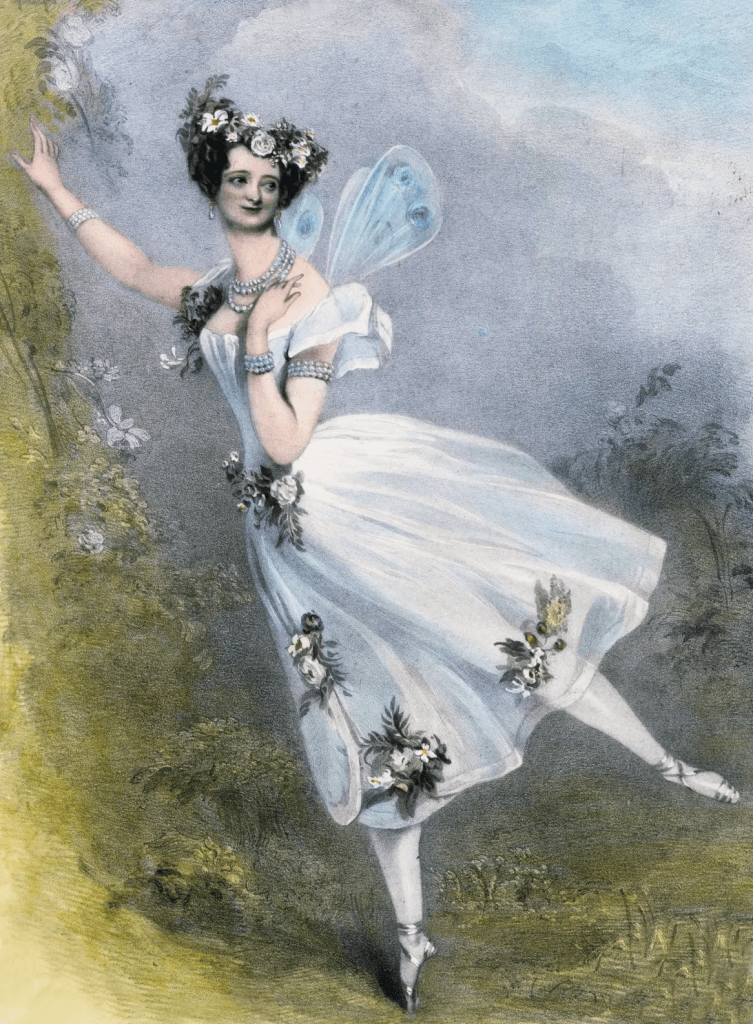
Born in 1804, Taglioni came from a long line of performers, her father being an Italian dancer who was exposed to the French noble style by his own parents (Homans 136). Throughout her early dance training, she was criticized for having many physical limitations, including bent posture and scrawny legs (Homans 137). However, in an effort to remake herself and reform her technique, she put herself through an intense training regimen that both gave her unbelievable stamina and added a unique style and refinement to her dancing (Homans 140). Instead of abiding by the dance trends of the time, many of which involved showy tricks that she deemed crass, she instead presented her own unique image onstage. It was understated and noble, yet also virtuosic in some respects due to the off-balance way she approached movement and the sheer difficulty of the feats she attempted (Homans 142). One such feat was the use of “pointe work”, or at least a slight rise to the toes and a controlled lowering, made possible by darned slippers (Homans 141). Although she was not the first dancer to do this, she integrated it into her work in a way that was less of a gaudy spectacle than an ethereal movement that required both grace and incredible strength (Homans 141).
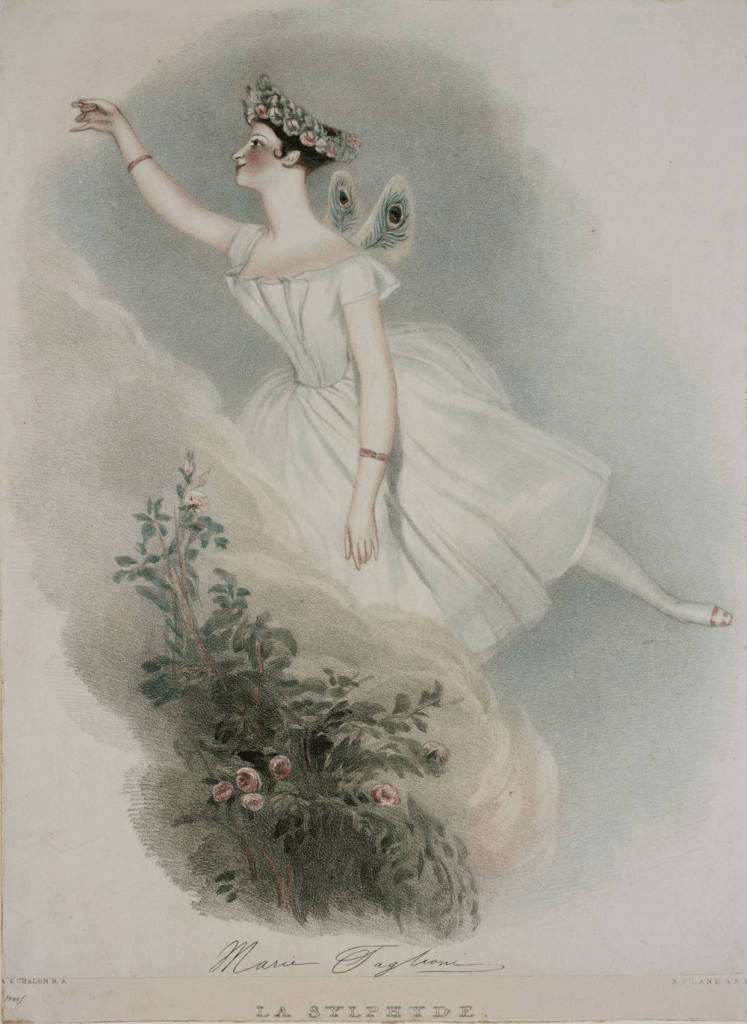
Taglioni’s performances captured the attention of the world. Disillusioned by the upheaval of French noble culture and the sinful decadence of the newly formed bourgeois class, Romantic writers such as Charles Nodier and François-René de Chateaubriand looked to fantasy, mysticism and the occult arts as means of escapism (Homans 152, 158). Marie’s performances in ballets such as La Sylphide are documented as being widely inspirational to this group of “Taglionists”, who contributed large amounts of work to the Romantic literary cannon. The dancer’s portrayal of otherworldly creatures such as sylphs and spirits were an entrancing and idyllic embodiment of beauty and virtue, values that many artists thought had been lost to society.
The freedom that the sylph represented, as well as its airy, spiritual, and distinctly feminine demeanor, was also attractive to the women in the audience. It become fashionable to wear scarves, lace, and veils to appear light and to tune into some of this “sylph-like” mystique (Bennahum 230). More relevantly, those who longed to achieve the fragile and delicate nature of the Romantic heroine wore corsets to tighten up their frames and often starved themselves to achieve the vaporous look that Taglioni’s body – once so harshly criticized – so effortlessly portrayed (Bennahum 230). Thus, the woman in ballet was put on a pedestal, regarded a symbol of perfection, and part of that perfection was her thinness and body shape. Today, although much has changed in our knowledge of both gender roles and health practices, the culture of ballet is still lagging behind, holding on to some of these nineteenth century ideals. Bodies are expected to be light and graceful, and the ballerina is still held to extremely high standards that are not the same for men. The beauty of the ballerina is still idealized, by dancers and nondancers alike, and her image is more often than not similar to that of the sylph – ethereal, irresistible, and unattainable.
The Life at the Opera
That being said, the environment for the dancers of the Opera at the time created quite the contrast with this idealized femininity. The objectification and sexual exploitation that was going on behind the scenes provides another lens through which to view the development of the “dancer body”. Remnants of the dark culture that surrounded the ballet still echo through the years.
In 1830, King Louis-Philippe of France took the throne after revolution and began a very different type of rule (Homans 144). As mentioned before, he presided over a “bourgeois monarchy”, where power and wealth was obtained by the middle class (Homans 144). This impacted the Paris Opera greatly, as the previously government-backed institution suddenly came under private management, thrown to the mercy of the free market and the wealthy subscribers of the bourgeois (Garafala 35). The new owner, Louis Véron, was an adept businessman who made many changes to please this new type of theater-goer (Homans 144). Unfortunately, these adaptations were often at the expense of the dancers.
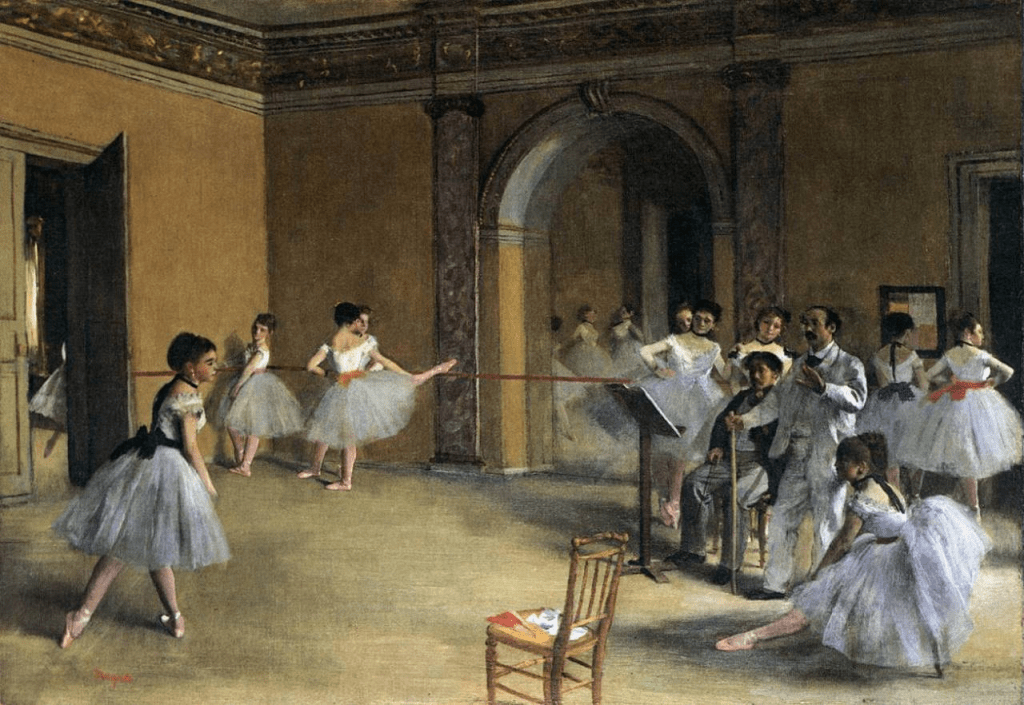
Pensions eliminated and sorely undercompensated, most ballet girls had to seek elsewhere for their livings. More often than not, they funded their existence through close relationships with wealthy male patrons (Bannahum 228). Véron opened up the famed foyer de la danse to these men of money, who wished to mingle with the dancers before the show (Cordova 113). In 1833, several of these gentlemen formed their own club, the Jockey Club, and gained a reputation for their ballet obsession (Homans 145). As a result, women’s bodies were highly scrutinized by both patrons and the press. Ballerina legs, in particular, were a subject of much gossip, as the long skirts in women’s fashion at the time rarely afforded the viewing of ankles, calves and thighs (Bennahum 228). Members of the club were said to bring binoculars just to further inspect the bodies of the performers, and reviews often described the legs of one ballerina or another in great detail (Bennahum 229). Thus was born a culture in which the ballerina was both a symbol of purity and prostitution, an idealised figure of beauty and a subject of bordello poitical dealings, her body a commodity for sale (Garafala 39).
This is not to mention the horrible conditions in which many dancers resided. Starvation and disease were inevitable results of their poor compensation and dangerous occupation (Bennahum 237). Hard physical labor, little pay, and unsafe sexual practices definitey took their toll. Ballerina bodies were involuntarily molded by these circumstances, thinness for some being an unfortunate reality rather than an ideal aesthetic. It is easy to see how much of the severe criticism and scrutiny of dancer’s bodies that we see today may have been born from this period, where objectification of women was commonplace and living conditions created a “look” for dancers that may or may not have been intentional.
The Ballerina Lifestyle
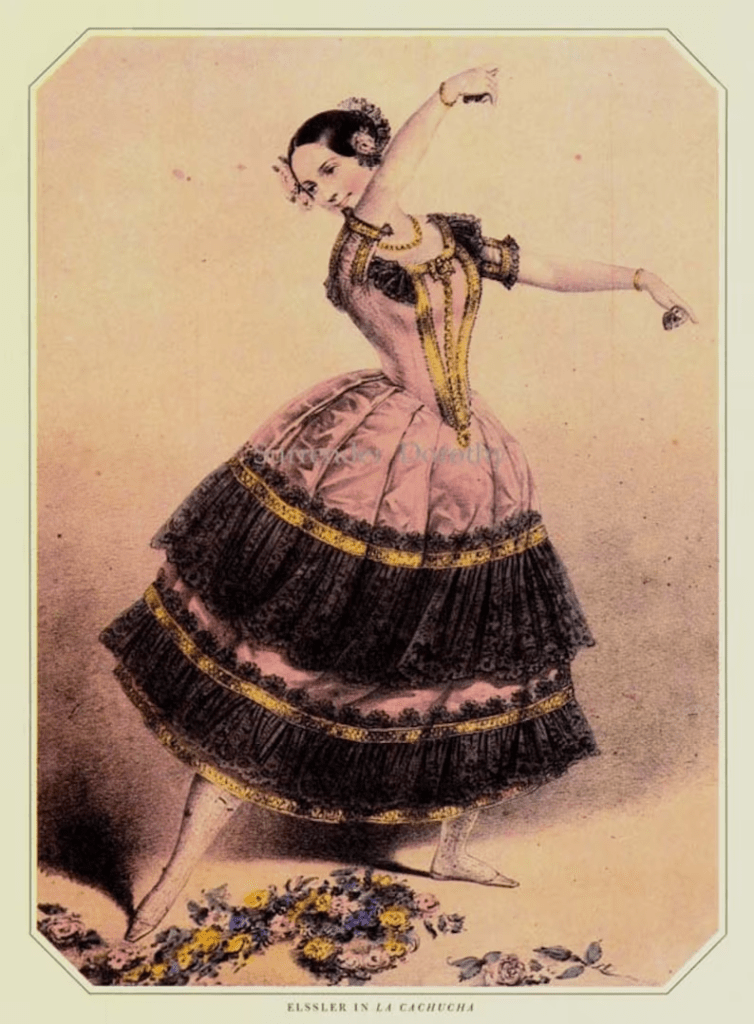
Yet, to this day, despite the hardships that many dancers face, becoming a ballerina is still a goal that many seek to obtain. The same was true in the Romantic Period. Despite the brutal mental and physical conditions dancers had to contend with, there were still those who were willing to endure it for their art. Being onstage was an enticing prospect, and if the right connections were achieved, it provided an entrance to a much more exciting life than would be experienced as a working class Parisian (Bennahum 237). Then, there was the possibility of stardom. Women like Taglioni and Fanny Ellsler had celebrity status and were known all over the world by their name and their likeness (Bennahum 237). Even though the Opera remained a patriarchal institution, the cult of the ballerina still had amazing allure for a woman seeking to transcend her own reality and have some agency in her life (Cordova 125). If this meant that suffering had to be endured, the pain was worth it for this highly romanticized dream. I worry that this “noble suffering” is still a valid rational for many toxic behaviors in the current ballet world. Eating disorders, excessive injuries or pain, and other forms mental or physical abuse are common problems dancers face that can be pushed to the side with this “no pain no gain” justification. Certainly it has kept toxic body standards alive and well, enticing dancers to do whatever it takes to reach the ideal of perfection. Although the problems ballerinas face today may be slightly less dire than they were in the 1800s, they are still overshadowed by a similar desire to achieve the “ballerina dream girl” status of romantic fantasy.
The Romantic Period was a time of great change in the ballet world, and many beautiful contributions to the art form came out of the era. However, the culture surrounding ballet had many dark undertones that still seep into our current dance approach. Specifically, the way we view and evaluate women’s bodies in the dance community now has many parallels to ideas and practices from the nineteenth century. The idealization, commodification, and romanticization of the ballerina body that happened during the Romantic Era has never quite been erased. Just like the sylphs and willis of the romantic classics, these ideas continue to haunt us.
Works Cited
Chazin-Bennahum, Judith. The Lure of Perfection: Fashion and Ballet, 1780-1830 Routlledge, 2005, 221-238.
Cordova, Sarah Davis. The Cambridge Companion to Ballet, Cambridge University Press, 2007, 113-126.
Garafola, Lynn. “The Travesty Dancer in Nineteenth-Century Ballet”. Dance Research Journal, vol 18, no. 1st ed., 1985. pp. 35-40., Accessed 15 Dec. 2021.
Homans, Jennifer. Apollo’s Angels: A History of Ballet 1st ed., Random House, 2010, 135-175.
Kiem, Elizabeth. “George Balanchine: the Human Cost of an Artistic Legacy” HuffPost Entertainment, 23 Jan. 2014, http://www.huffpost.com/entry/post_6717_b_4640946. Accessed 15 Dec. 2021.
 Plantbased in Pointe Shoes