Hi wonderful readers!
I’m so happy you’re here on the blog today because I am totally pumped about this post!
As I mentioned in my previous update, I have become officially yoga certified over the summer with a 200-hour training. The certification was through Green Lotus Yoga and Healing Center in Mendota Heights, Minnesota, and I would definitely recommend doing it to anyone interested. The experience was truly life changing, and the things that I learned will stay with me forever. I’m so excited to have gotten a job teaching at my school gym this year. If I can share even just a little bit of the wisdom that was given to me in order to uplift someone who needs it, I definitely want to do that!
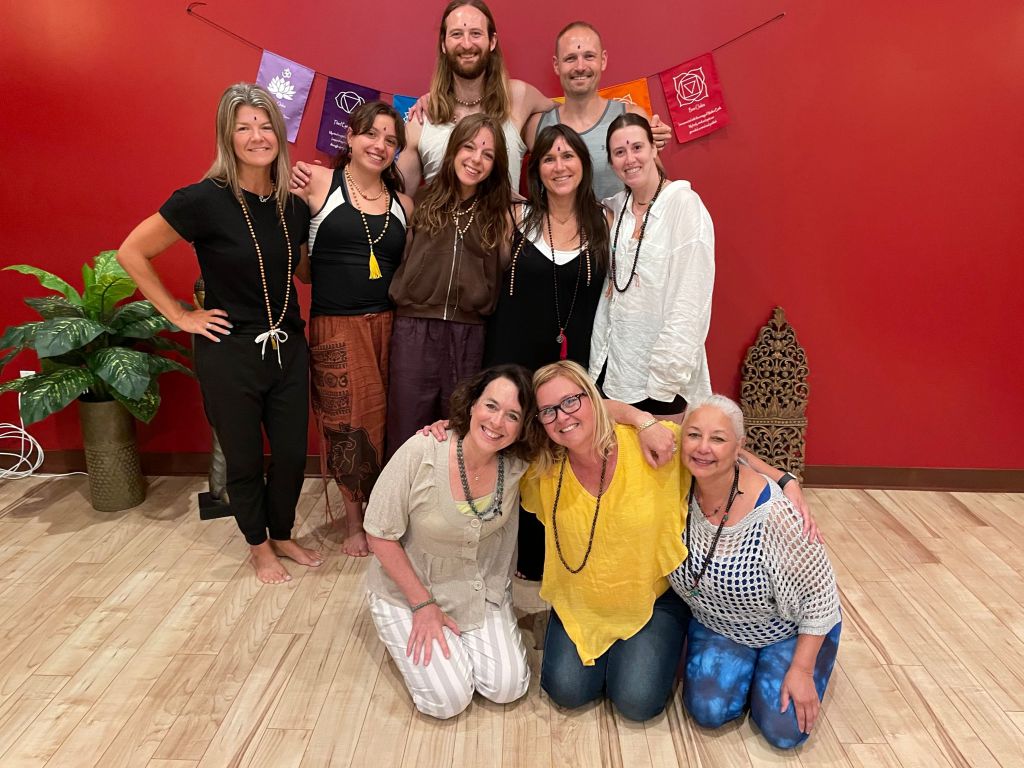
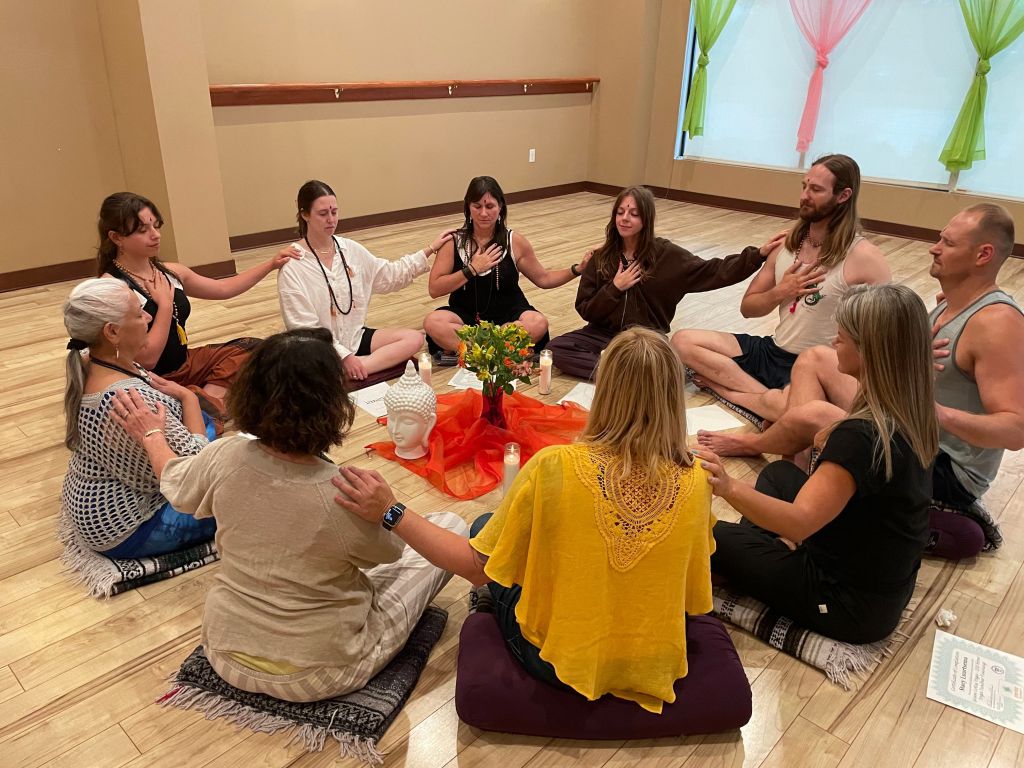
But I also want to do more. It just so happened that there were two other dancers in my 7-person sangha (or group) of yoga teacher trainees. Several of our instructors were former dancers as well. We had so many fascinating discussions about the philosophy of yoga and yoga teaching and how it related to our experience in the realm of dance. I know that, personally, I had my eyes opened to many intriguing ideas that I want to incorporate into my dance practice. So, I thought, why not share a few on the blog?
That being said, I have a few disclaimers before I begin. The first one is that this is all through the lense of my own experiences. This means that when I talk about dance and dance culture, I am talking from the point of view of a person who was trained mainly in Western, performance-oriented styles. Not all dance styles or even dance studios have the same culture and issues! I am also talking from the point of view of a person who has been given 240 hours of training in Hatha yoga, with some instruction on gentle and vinyasa thrown in. I am in no way an expert in yoga, and I am definitely not a scholar of yoga philosophy. These ideas are related to concepts as they were explained to me and that I interpreted myself to align with my life. If you want to know more, please look to experts in the field – I’m sure there are plenty of people who would like to share their beliefs and culture with you, and there are tons of resources out there on this school of thought! The last thing is that I am still working to apply these ideas myself, and that writing these things actually helped a lot in articulating what’s been on my mind. I am nowhere near the end of this journey, so give me some grace in taking it with you :).
That being said, as many of us begin new school years and seasons, I hope this can help you in some way to align your body, mind and heart in a manner you might not have thought of before. I hope that my passion for this spiritual and physical practice comes through on this page and that it inspires you even a fraction as much as it does me. Therefore, I feel obligated to share, from my heart to yours: five yogic lessons the dance world would be served well to apply.
1. Honor the Body Nobody can deny that yoga (at least when practicing the asanas) and dance are both very body-centric. However, at least from what I’ve experienced practicing primarily Western dance forms in a pre-professional environment, the approach to the body is slightly different.
As a yoga instructor, I find myself always emphasizing the notion that we must listen to our bodies first. The body is the highest center of instruction and intuition in the room. If a pose is causing pain or discomfort, there is always a modification that can be applied. Each pose has particular benefits, and these same benefits can be obtained in a number of positions.
In order to develop a practice, the body must be pushed to an edge, it is true. However, you must be the master of yourself, and decide when that edge is dangerous to your health, or simply challenging and annoying.
In any sort of correction, modification, or adjustment, the main question an instructor is encouraged to ask the student is “How does it feel?” The emphasis is on the internal experience of the practice. We want to get the students into whatever position will assist them the most in reaching their goals while also maintaining relative comfortability and confidence. There are obviously general corrections that must be made for safety, but the main focus is on providing the student with the most possible benefit for their individual selves, and honoring whatever choices they make on this journey.
Teaching dance is, of course, a different beast. There is an aesthetic that we are chasing, predetermined movements and techniques that we are trying to hone to the best of our abilities. Especially in ballet, there is significantly less freedom to make individualized choices within the context of a class or audition.
But…
It’s this question. “How does it feel?” Every once in a while, I’ll hear it make its way into a technique class, but more often than not, it is completely absent in corrections and adjustments. The visual, the competitive, the performative aspects of dance all turn it into a practice that is evaluated from the outside-in. But I think that so much benefit could be derived in investigating how movements feel in each individual body. A pose that looks good from the outside, but internally causing pain or discomfort, is not going to be beneficial in the long run if it results in chronic injury.
Imagine how the health of the dance world could improve if we had the conversations with dancers early about what kind of pain means the body is reaching an edge and what kind of pain is a sign that an adjustment needs to be made. Imagine if we made such adjustments more accessible, through our language and our treatment of those who take these options. Imagine if we gave dancers even slightly more ownership of their bodies, and a chance to honor their own needs instead of treating them like a cheap commodity meant to perform a task.
Even just asking that question grants dancers more autonomy and power over their own selves, and could result in some great experimentation on how their dance practice could be more beneficial to them. I think this is extremely valuable.
2. Everyone is Different
I think that one of the most enlightening classes that I took as part of my YTT was Yoga Anatomy. Because I took a year-long Kinesiology for Dancers course in the sophomore year of my ballet degree, you would think that the information would have been familiar, if not review from that far more comprehensive look at the human body. However, there was something about learning the information through the lense of a teacher, with the values and principals of yoga in mind, that made it so much more revelatory.
We know that everyone is different, that each pose looks different on each body and some people can do things that others simply can’t (and quite possibly never will). But how often to we really dive deeply into why that is? In the anatomy class, we talked in-depth about the multiple reasons a person might not be able to achieve a certain posture in its “technically correct”, “fully expressed” form. (I put these terms in quotation marks because they are largely viewed as outdated in the yoga community – you don’t need to “fully express” a pose to do yoga successfully).
Yes, a lack of flexibility in the muscles (also described as tension) could be a reason that a limb doesn’t extend a certain way. However, equally important factors in determining range of motion include the way that the bones fit together to form joints and the compression they cause when they run up against each other, the places where body mass such as fat or muscle condense to limit movement, and the simple proportion of one part to another in your body. Each of this factors is different in every single human being, and the majority of them are things we can’t control. We can stretch our calves and attempt to lengthen our Achilles tendons all we want, but if bone compression limits the range of motion in the front of our ankle joint, we may never be able to squat all the way down without lifting our heels, or place our feet flat on the mat in downward facing dog. If our arm is relatively short in proportion to our legs, we may never be able to touch the ground in triangle pose without compromising the integrity of our spine, and may always need a block to assist in bringing the floor closer. It has nothing to do with strength, flexibility, or willpower. As teachers, we must learn to recognize this, and attempt to give our student variations to add to their practice to make them feel strong in their own bodies.
Often times in dance, I feel that all bodies are treated as if they were the same. If you can’t seem to apply a certain correction or do things in the certain way that a teacher is asking, there is a sense of shame that comes along with it, a sense of not being good enough as a result of factors that are often beyond your control. Just as yoga was created on a very specific type of body (a short, Indian, male body, to be exact), so has ballet been catered to a very specific shape and size of person. There are lines and movements that some body types can achieve, while others simply cannot.
Sometimes I wonder, instead of telling someone to apply a correction because it is “right”, or telling someone they can’t do something because they aren’t “working hard enough”, what would happen if we explored the reason why their body can’t seem to catch up with their brain? We all have a basic idea of what certain things “should” look like, after all, if we’re anywhere beyond the level of beginner. Is is really a matter of strength, flexibility, or mind-body connection? Or does it venture into the range of less “improvable” things, such as joint compression, body composition, or proportion? What would happen if we worked with dancers, helped them modify movement in a way that made it work better for them, instead of straining towards something that would be forever unachievable? Or at least gave them the space and the voice to work these things out about themselves on their own?
There a so many components to being a dynamic performer, and some of the best dancers in history had far from what we would call “the perfect ballet body”. They got there somehow. But there is a reason that the best dancers aren’t necessarily the best teachers, and that’s because they figured out what worked for them. It won’t always work for everyone. The best teachers know how to pull the most potential out of each individual. In my opinion, the dance world could use more of this individualized instruction that begins with basic anatomy and allows dancers room to find what works for them in a constructive way.
3. It’s All About the Energy
If you’ve taken a few yoga classes in your life, you’ve probably heard the phrase, usually spoken during the beginning grounding – “set an intention for your practice”. This allows the yogi to find a focus, to clarify a goal and prepare for the journey ahead. The hope is that they send their energy that way for the remainder of their time on the mat.
In fact, when you dive into the philosophy of yoga, it is so much more about the energy than anything else. People often come to yoga for the physical workout, but the point of the asana practice is really just to move the energy into better alignment, to call the mind home to the body so that deeper transformation can take place. Each pose, no matter how simple, has a specific energetic intention, associated chakras (or energy centers), and dynamic feeling. The point of corrections is both make the practice safer and to adjust the body so that prana can more easily flow.
Most Western yoga teachers know their audience, and if they don’t think that more metaphysical commentary during class will be well-received, they don’t use it. However, that doesn’t mean that life-changing energy is not at play here. There is still endless research that demonstrates the ways yoga can improve health, not just on a physical level, but on a mental and spiritual level as well. As I was told during training, “do the practice and the rest will come”. Being present physically and engaging in the asanas is an excellent start towards a deeper yoga experience.
There are many dance forms throughout the world that connect to deeper spiritual and metaphysical energy in their movement practice. However, generally speaking, Western performance-based techniques such as ballet don’t make that connection a priority. And I’m not saying that they need to or should. But there is still a lot to take from these ideas.
There’s something to it, the idea of energy moving through the body in the purest, most easeful way possible. Ballet emphasizes straight, unbroken lines, but often time we are scrunching, contorting, and otherwise forcefully manipulating our bodies in order to get there. What if we focused less on the physical output and more on the way prana moves through our whole selves in order to achieve what we want? The difference may be subtle, but I feel like it could really change the way that we look at things.
And then there’s that idea of intention. Ballet is an art, and it is my opinion that all art, no matter how abstract, is made with an intention. It comes from our souls, it tells stories that we think need or want to be heard. So often, I feel that students, teachers, and artistic directors alike get lost in looks and aesthetics, while forgetting the reason that the art exists in the first place. It is a reminder that we must continue giving ourselves, and I think that the dance world would benefit greatly if we keep sending our intentions that way. It may not be an intention to do with spirituality necessarily, but it does have to do with the human condition that brought us here. Even just thinking about it can be extremely powerful.
4. Use the Breath
Ahhh the breath. Or pranayama, as it’s called in yoga, a limb of its own. Our whole livelihood rests on our ability to breathe, yet we often don’t even think about it as we’re doing it. It is the link between the somatic and autonomic nervous systems, something we don’t have to constantly process doing but that we can also consciously control if we desire. Breathing can slow the heart rate or speed it up, change the way that the muscles are engaging. There are pranayama techniques to balance the body, calm the body, invigorate the body. There are pranayama techniques to allow a focal point for meditation, to center the mind, to clear the head. So much of mental and physical health goes back to the breath. The breath is literally so cool.

In an asana practice, specifically in more flowing styles (although breathing through poses is important in more restful styles as well), there are corresponding breath cues for almost every movement. The breath cues tend to dictate the energy of the movement and the desired result. Speaking in terms of the Chinese concept of yin/yang, exhales provide the body with more restful, yin energy, and are often used in forward folds, stretches, releases, and downward motions. Inhales provide the body with more invigorating, yang energy, and are often used for backbands, lifts, and energetic upward motions. The breath is a great entrance point for that mind-body connection and greatly informs the way that the asanas are performed.
I don’t really have super deep, meaningful commentary about the way this applies to dance except that I wish the breath was referenced and used more. It is such a simple yet effective tool! I’ve often had teachers ask me if I’m breathing, but they never really give me any tips on when or how- just to do it. The closest I’ve maybe came was one of my old instructors constantly referring to specific motions as “tee-yah situations” – the “tee” meaning and inhale and the “yah” meaning a powerful release (at least, that’s how I interpreted it). However, I also had the same teacher tell me that I was breathing too loudly onstage while I was doing a rather rigorous lead role in one of our shows, so I’m not entirely confident she was that in tune with the power or necessity of the exhale either. All I’m saying is, it would be cool to see what we could take from yoga to make our own movement practices more easeful. You’ve got to breathe, so why not experiment with using pranayama to your advantage? Maybe consciously exhale in that grande plie, or pique arabesque on a sharp intake of breath. It could be kind cool to see how it affects your dancing (though I suppose I can see how doing it with excessive force onstage could be minorly distracting).
5. Set the Ego Aside
Conversations regarding a yoga practice and its effectiveness often circle back to this concept of the ego. The ego is that little voice in your head that is constantly evaluating your self-worth. Often times, when discussing instances where the ego has come into play, it is referred to as a sentient thing, a component of your consciousness that enjoys interfering when it is least needed.
It’s the ego that tells you that you need to do the practice just as good or better than you did yesterday, even though the body can completely change from day-to-day, and what was easy or beneficial yesterday may not be the same. It is the ego that tells you to take the challenging modification that the person next to you is doing, even if your body is telling you not to, because you have to prove that you are just as good as them. It is the ego that tells you that you are better than the person on your other side because you’re taking a challenging modification that they are not. It is the ego that tells you to twist and force yourself into a pose that you probably shouldn’t be doing, if your prana and breath are not flowing freely. And it is your ego that tells you to worry about what the person behind you is thinking about you, what the person in front of you is thinking about you, what the front desk person thinking about you, what the teacher is thinking about you, etc – the whole damn time.
Thinking of the ego in this way, an active voice separate from myself, has somehow changed the way I think about a lot of things in the dance classroom as well. For example, say that I find myself frustrated that the dancer next to me is doing more pirouettes than I am. Instead of feeling jealous, or mad, then recognizing that I’m feeling jealous or mad, then getting mad at myself for feeling jealous or mad, and falling into a depressing loop of anger and jealousy (the cycle is endless), I can just gently tell my ego to back off a little bit. Each of us have it, it is nothing to be ashamed of, but we have control of when we want it to be active and when we want it to take a break. Giving it a name can depersonalize it and make that process more effective.
Granted, this is a performing industry, which makes it different than yoga. We cannot constantly be shoving the ego away all the time. Sometimes it matters what people think, our livelihoods depend on ticket sales after all. However, I also feel like this environment makes for a lot of swollen egos that are not productive in any way. We could benefit from recognizing instances where that voice is overactive, and tell it to take a little break. There is so much freedom in that.
Well, that’s all I have for you today folks. Hopefully I didn’t bore you too much! The funny thing is, I feel like I have so much more to say about these things! I’ve just become a yoga nerd I guess :). If you ever want a conversation or resources (or to share some resources with me), feel free to send me a message! Any feedback is always appreciated. If not, I will catch ya next time.
All my love (and namaste),
Olivia
 Plantbased in Pointe Shoes